+1 5618168645
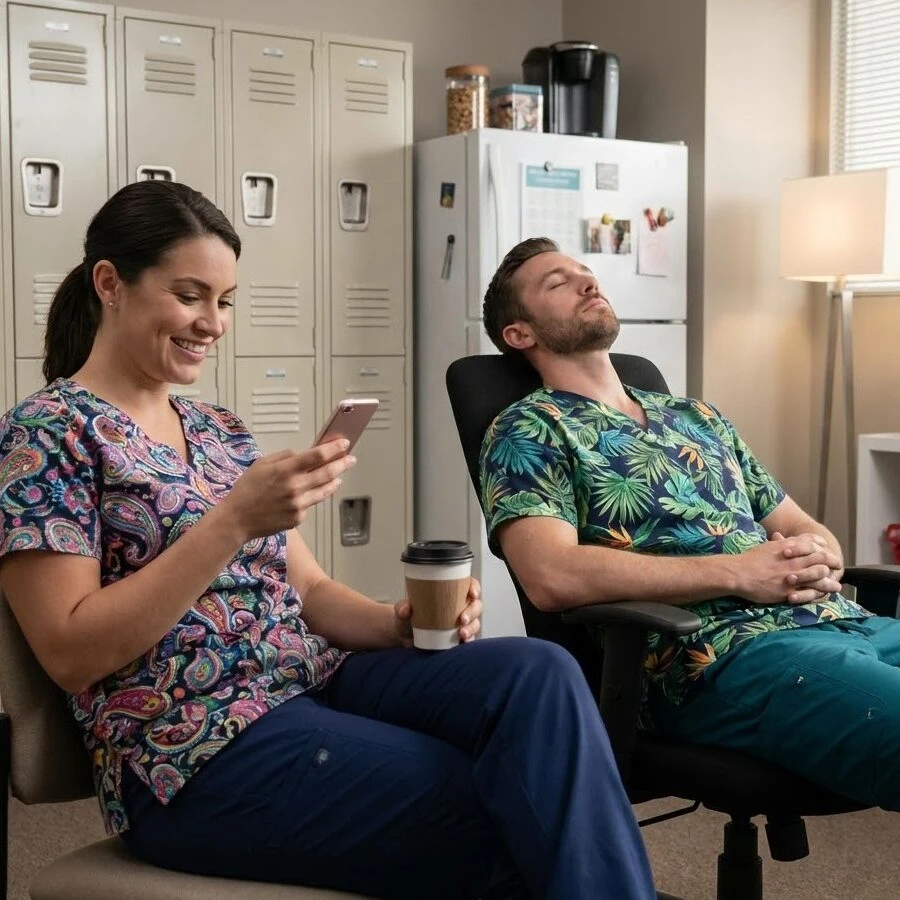

Hidden Requirements of Scrubs for Long Shifts: What Nurses Actually Need
Long shifts are an accepted reality in healthcare. Twelve hours is common, overnight rotations are frequent, and breaks are often unpredictable. While much attention is given to schedules, staffing, and workflows, one constant tends to fade into the background: what nurses wear for the entire duration of their shift.
Scrubs are often evaluated on visible criteria—color, fit, or compliance with dress codes. Yet for nurses working extended hours, the most important requirements are rarely obvious at first glance. They are subtle, cumulative, and deeply connected to how the body moves, heats, cools, and tires over time.
Understanding these hidden requirements offers a more realistic perspective on what functional medical apparel should achieve.
Fatigue Is Cumulative, Not Instant
Discomfort does not usually announce itself in the first hour of a shift. It accumulates gradually. A seam that feels slightly rigid, a fabric that retains a bit too much heat, or a waistband that lacks flexibility may seem insignificant early on. By hour eight or ten, these small irritations can translate into noticeable fatigue.
This is why evaluating scrubs based on initial comfort alone is misleading. What matters more is how a garment behaves after repeated movement, perspiration, bending, lifting, and walking. Long shifts expose weaknesses that short wear tests never reveal.
Effective scrubs are designed to minimize friction—between fabric and skin, between movement and resistance, and between physical demand and garment response.
Breathability Is About Temperature Control, Not Just Airflow
Breathability is often reduced to a single concept: how airy a fabric feels. In reality, temperature regulation during long shifts is far more complex.
Nurses transition constantly between different environments—patient rooms, corridors, medication areas, and sometimes outdoor spaces. Each has its own temperature and humidity profile. Fabrics that trap heat or moisture may feel acceptable in controlled conditions but become uncomfortable during moments of physical exertion or stress.
Materials that manage moisture efficiently and release heat gradually help maintain a stable body temperature. This stability reduces energy expenditure, allowing the wearer to focus on tasks rather than physical discomfort. Over long shifts, thermal balance becomes a functional requirement, not a luxury.
Mobility Is Defined by Recovery, Not Stretch Alone
Stretch is often highlighted as a key feature in modern scrubs, but flexibility alone does not guarantee comfort. What matters equally is recovery—how well a fabric returns to its original shape after movement.
Nurses perform repeated actions: reaching, squatting, turning, and leaning. Fabrics that stretch but fail to recover can become loose, sagging, or restrictive in unexpected ways. This leads to constant adjustment, which interrupts workflow and concentration.
Well-engineered materials combine moderate elasticity with structural integrity. They move with the body, then reset, maintaining consistent fit throughout the day. This quiet reliability is rarely noticed—but immediately missed when absent.
Skin Sensitivity Increases Over Time
Extended wear amplifies skin sensitivity. Friction points that seem harmless during short use—such as underarms, necklines, or waistbands—become increasingly noticeable over hours of movement.
Seam placement, fabric weight, and surface texture all influence long-term comfort. Flat seams, balanced fabric density, and smooth finishes reduce irritation during repetitive motion. These details may not be visible to others, but they significantly shape the wearer’s experience.
In this sense, comfort is less about softness and more about respect for how the body responds to sustained contact.
Easy Care Is Part of Wearability
Laundry performance is another hidden requirement that becomes apparent only over time. Scrubs worn for long shifts are washed frequently, often under high temperatures and with strong detergents.
Fabrics that lose shape, stiffen, or fade quickly create a cycle of replacement and inconsistency. Over time, this affects not only cost but also daily comfort. Scrubs that dry quickly, resist wrinkles, and maintain structure after repeated washes reduce friction both operationally and personally.
Ease of care contributes directly to long-term wearability—an aspect often overlooked in discussions of comfort.
Professional Presence Depends on Functional Stability
Professionalism is commonly associated with appearance, but during long shifts, it is closely tied to how stable a uniform feels. Scrubs that stay in place, maintain their shape, and require minimal adjustment support a composed presence.
When clothing fades into the background, attention remains on patients, communication, and clinical decisions. In contrast, garments that demand constant correction subtly erode focus.
True professionalism, in this context, is supported by functional stability rather than visual design alone.
Rethinking Scrubs Through the Lens of Long Shifts
The hidden requirements of scrubs emerge only when garments are evaluated across time, movement, and repeated use. Comfort, breathability, mobility, skin interaction, and care performance are not isolated features—they work together to shape daily experience.
As healthcare environments continue to evolve, understanding these less visible needs becomes essential. Scrubs are no longer passive uniforms; they are part of the working system that supports endurance, focus, and consistency throughout long shifts.
Recognizing this reality allows manufacturers, institutions, and wearers alike to make more informed choices—grounded not in trends, but in how garments truly perform when they are needed most.
**For brands and uniform buyers in healthcare**
For healthcare brands and uniform buyers, working with an experienced medical scrubs manufacturer in China like MK Kids ensures that comfort, durability, and recovery performance are engineered into garments designed for long shifts.