+1 5618168645

How Modern Healthcare Is Redefining Scrubs Beyond Uniforms
For decades, medical scrubs were viewed as simple work uniforms designed mainly for hygiene and practicality. Their purpose was straightforward: durability, easy cleaning, and standardized appearance.
But healthcare has changed dramatically — and scrubs are changing with it.
Today’s healthcare professionals work in fast-moving, high-pressure environments that demand mobility, comfort, and emotional resilience. At the same time, younger generations of nurses and medical staff are bringing entirely new expectations around aesthetics, self-expression, and work-life integration.
Modern scrubs are no longer just uniforms.
They are becoming performance apparel, professional identity, and lifestyle workwear all at once.
Key Takeaways
- Modern scrubs are evolving from basic uniforms into performance-driven apparel.
- Emotional comfort is becoming just as important as physical comfort.
- Gen Z healthcare workers are reshaping expectations around fit and style.
- Social media is accelerating scrub trends worldwide.
- Textile innovation and sustainability will define the next generation of medical apparel.
Scrubs Are Becoming Performance Gear for Long Shifts
Healthcare professionals move constantly throughout a shift.
They walk between departments.
Lift patients.
Bend, stretch, and stand for hours.
Traditional stiff uniforms are no longer enough for this level of physical demand.
That is why modern scrubs increasingly borrow ideas from athletic wear and performance apparel.
Today’s medical uniforms often include:
- four-way stretch fabrics
- moisture-wicking technology
- ergonomic tailoring
- lightweight construction
- flexible waistbands
- breathable fabric blends
These features are not simply fashion upgrades. They directly improve mobility and comfort during long clinical shifts.
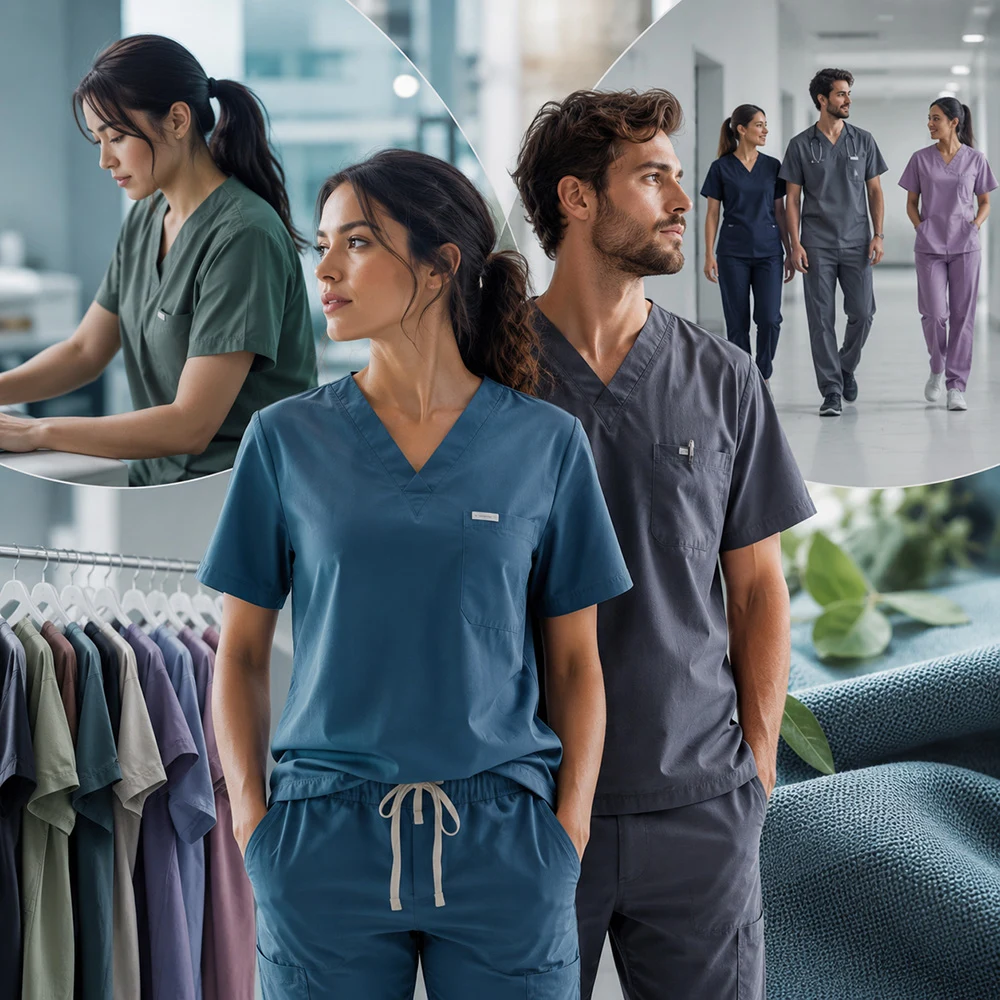
Jogger scrubs are a perfect example of this transition. Their tapered silhouette and stretch construction allow healthcare workers to move more freely while maintaining a clean and professional appearance.
“Modern scrubs are no longer designed only for appearance — they are designed to support physical performance throughout demanding shifts.”
This shift is also changing how healthcare brands source their products. More companies now seek manufacturing partners capable of combining technical fabrics, ergonomic construction, and private-label customization. usinesses exploring scalable production solutions often collaborate with experienced suppliers through professional channels like MK-Kids’ OEM & ODM manufacturing solutions for China scrubs.
Emotional Comfort Is Becoming Equally Important
One of the biggest changes in modern medical apparel is something less visible: emotional comfort.
Healthcare workers today face increasing levels of stress and burnout. Long shifts, emotional fatigue, staffing shortages, and post-pandemic pressure have changed what professionals expect from their uniforms.
Scrubs are no longer expected only to “function.”
They are increasingly expected to help healthcare workers feel more relaxed, supported, and comfortable during emotionally demanding workdays.
This is one reason softer fabrics and relaxed silhouettes have become so popular.
Color trends are changing as well.
Instead of harsh clinical whites, many healthcare environments now favor:
- sage green
- dusty blue
- muted lavender
- warm gray
- soft earth tones
These colors create a calmer and more approachable atmosphere for both staff and patients.
Modern hospitals themselves are also evolving toward more human-centered design. Medical apparel is naturally following the same direction.
“The future of scrubs is not only about functionality — it is also about emotional well-being.”
Gen Z Healthcare Workers Are Reshaping Scrub Design
The rise of Gen Z healthcare professionals is having a major impact on the scrub industry.
Younger nurses and medical staff approach workwear very differently from previous generations. They care deeply about:
- individuality
- aesthetics
- comfort
- self-expression
- social-media-friendly styling
This demographic shift is accelerating the demand for:
- jogger scrub pants
- tailored fits
- modern color palettes
- minimalist branding
- fashion-inspired silhouettes
For younger professionals, scrubs are becoming part of personal identity rather than simply institutional dress code.
This explains why many premium scrub brands now position themselves more like lifestyle or athleisure companies rather than traditional uniform suppliers.
Traditional Scrubs vs Modern Scrubs
| Traditional Scrubs | Modern Scrubs |
|---|---|
| Basic work uniforms | Performance apparel |
| Loose, generic fits | Tailored silhouettes |
| Utility-focused | Identity-focused |
| Limited color options | Lifestyle-inspired palettes |
| Hospital-only use | Cross-scene wearability |
| Standard fabrics | Technical performance fabrics |
Social Media Is Turning Scrubs Into Lifestyle Apparel
Social media platforms are changing the scrub industry faster than ever before.
On TikTok and Instagram, healthcare workers regularly share:
- shift outfit videos
- scrub reviews
- “day in the life” content
- workplace styling tips
- favorite scrub brands
As a result, scrubs are no longer hidden inside hospitals. They are now part of digital culture.
This online visibility influences:
- purchasing decisions
- color trends
- fit preferences
- packaging expectations
- brand popularity
Healthcare workers increasingly want scrubs that look professional both online and offline.
In many ways, medical apparel is experiencing a transformation similar to the rise of athleisure in sportswear.
Scrubs are becoming lifestyle products.
What Today’s Healthcare Workers Actually Want
Modern healthcare professionals expect more from scrubs than ever before.
Today’s priorities include:
- Stretch and flexibility
- Breathable fabrics
- Functional pocket systems
- Inclusive sizing
- Soft-touch comfort
- Stylish silhouettes
- Sustainable materials
- Easy-care durability
- Emotional comfort
- Professional appearance
This growing list of expectations is pushing the entire medical apparel industry toward faster innovation.
The Future of Scrubs Lies in Textile Innovation
While style and comfort dominate today’s conversations, the long-term future of medical apparel will likely be shaped by fabric technology.
The next generation of scrubs is expected to include:
- antimicrobial textiles
- odor-resistant materials
- fluid-repellent coatings
- recycled performance fibers
- temperature-regulating fabrics
- smarter sustainable materials
Sustainability is becoming especially important as healthcare organizations and younger consumers pay closer attention to environmental responsibility.
Many emerging brands are already investing in recycled fabrics and lower-impact production methods as part of their long-term strategy.
“Scrubs are evolving from simple uniforms into wearable healthcare technology.”
What’s Next for Medical Scrubs?
Over the next five years, the industry will likely continue moving toward:
- smarter textile engineering
- stronger sustainability initiatives
- more personalized fit systems
- increased crossover between fashion and medical apparel
- greater emphasis on wellness-centered design
The line between healthcare uniforms and lifestyle apparel will continue to blur.
And for manufacturers, brands, and healthcare organizations, adapting to these changes will become increasingly important.
Conclusion
The modern scrub industry is undergoing a much deeper transformation than many people realize.
Today’s medical apparel is no longer defined solely by durability or utility. Instead, scrubs are increasingly shaped by changing healthcare culture, emotional well-being, younger workforce expectations, social media influence, and advances in textile innovation.
Modern healthcare professionals want apparel that supports movement, reduces stress, reflects identity, and adapts naturally to both work and everyday life.
As healthcare continues evolving, scrubs will continue moving far beyond the idea of traditional uniforms — becoming a reflection of how modern medical professionals live, work, and express themselves.