+1 5618168645

How to Source High-Quality Medical Scrubs Wholesale from China
Understanding the Growing Demand for Medical Scrubs
In today’s healthcare industry, medical scrubs have become far more than simple work uniforms. From hospitals and clinics to rehabilitation centers and pet care facilities, healthcare professionals rely on scrubs designed for comfort, durability, flexibility, and long working hours.
Demand for medical scrubs has grown significantly in recent years alongside the expansion of healthcare services and increasing attention to workplace hygiene and professional presentation. The COVID-19 pandemic also highlighted how important reliable healthcare apparel supply chains are, especially during periods of sudden global demand.
At the same time, expectations for modern scrubs have continued to evolve. Healthcare teams today are looking not only for functional uniforms, but also for improved comfort, better fabric performance, modern fits, and customized branding options. As a result, many healthcare brands, clinics, and distributors are exploring more flexible manufacturing solutions for custom medical scrubs and healthcare uniforms.
Why Many Businesses Source Medical Scrubs from China
China’s garment manufacturing industry offers several advantages for businesses sourcing medical scrubs and healthcare uniforms.
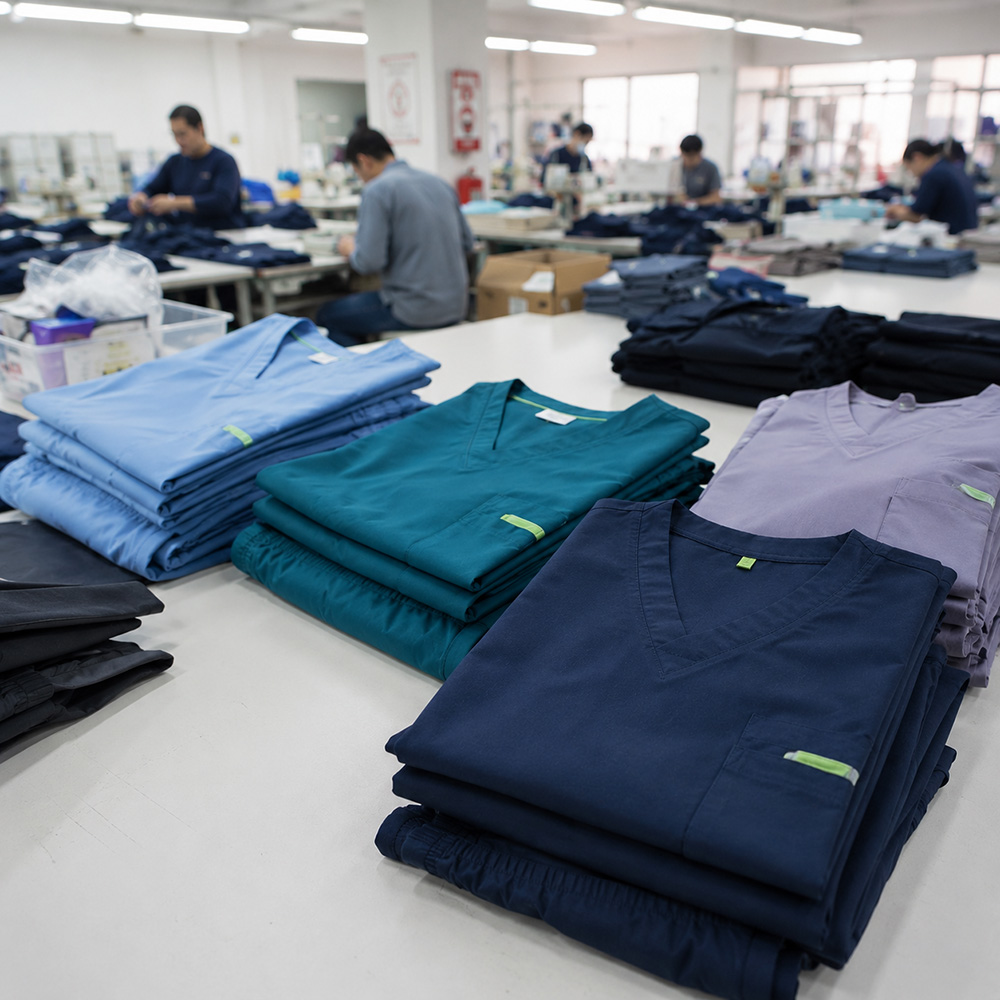
One of the key benefits is production flexibility. Chinese manufacturers often support a wide range of customization options, including fabric selection, color matching, logo printing or embroidery, packaging customization, and size adjustments. This flexibility is especially valuable for healthcare brands and private labels developing their own scrub collections.
Another advantage is manufacturing experience. Many factories have years of expertise working with woven and knitted performance fabrics, stretch materials, and functional garment construction. This allows suppliers to produce scrubs that balance durability, comfort, and practical workplace performance.
China also benefits from a mature textile supply chain. Fabric sourcing, dyeing, printing, embroidery, labeling, and packaging services are often integrated within the same manufacturing ecosystem, helping improve production efficiency and shorten lead times.
For growing healthcare brands and clinics, sourcing from China can also provide scalable production solutions. Small batch orders for sampling or testing can often be arranged alongside larger bulk production plans for long-term supply.
Evaluating Potential Medical Scrub Manufacturers
Finding the right manufacturing partner is one of the most important parts of the sourcing process.
When evaluating potential scrub manufacturers, it is important to review their production experience, communication efficiency, customization capabilities, and understanding of healthcare apparel requirements. A reliable supplier should be able to provide clear product details, fabric information, sampling support, and consistent production standards.
Manufacturers with experience in healthcare apparel production are often better equipped to understand the practical requirements of medical uniforms, including comfort during long shifts, pocket functionality, durability after repeated washing, and fabric performance in demanding work environments.
Communication also plays a major role in successful cooperation. Clear discussions regarding design expectations, fabric choices, sizing, packaging, production timelines, and shipping arrangements help reduce misunderstandings during production.
In many cases, reviewing sample products can provide valuable insight into workmanship and overall product consistency. Details such as stitching quality, fabric texture, fit, print quality, and finishing standards often reveal a supplier’s manufacturing capabilities more effectively than product photos alone.
Understanding Fabric Choices for Medical Scrubs
Fabric selection has a major impact on the comfort, durability, and overall performance of medical scrubs.
Different healthcare workplaces may require different fabric characteristics depending on climate conditions, movement requirements, washing frequency, and professional appearance expectations.
Cotton fabrics remain popular for their breathability and soft hand feel. Cotton-rich scrubs are often preferred in environments where comfort and natural airflow are priorities.
Cotton-spandex blends provide additional flexibility and ease of movement, making them suitable for active healthcare professionals who frequently bend, stretch, and move throughout the day.
Polyester-spandex fabrics are widely used for their durability, wrinkle resistance, and easy-care properties. These fabrics generally maintain color well and can withstand repeated industrial washing cycles.
Some manufacturers also offer advanced fabric options with moisture management, anti-odor treatments, fluid resistance, or quick-drying performance. The ideal fabric choice depends on the intended workplace environment and the balance between comfort, durability, and maintenance requirements.
Rather than focusing only on fabric composition, buyers should also pay attention to fabric weight, stretch performance, softness, and overall garment construction.
Sampling and Product Development
Sampling is an important stage when developing custom medical scrubs.
Before bulk production begins, most manufacturers can prepare development samples to help confirm fabrics, colors, sizing, fit, logo placement, and garment details. Sampling helps both buyers and manufacturers align expectations before larger orders move into production.
Healthcare brands and clinics often use this stage to refine practical design elements such as pocket placement, neckline styles, sleeve length, elastic waistbands, or stitching details.
Providing clear reference materials can improve the sampling process significantly. Tech packs, sketches, size charts, fabric references, and inspiration images help suppliers better understand design expectations.
At the same time, flexibility is also important. Certain fabrics, trims, or printing methods may need adjustment depending on production feasibility or material availability. Open communication during the development stage usually leads to smoother production outcomes.
Many buyers also request pre-production samples or production photos to help confirm fabric quality, colors, sizing, and workmanship before shipment. Clear communication and consistent production standards are often more important for long-term cooperation than overly complicated inspection procedures.
Quality Expectations and Production Consistency
Consistent production quality is essential for healthcare apparel.
Medical scrubs are worn repeatedly in demanding environments, so durability, comfort, and reliable garment construction all play important roles in customer satisfaction.
Manufacturers typically manage production quality through fabric inspections, cutting controls, sewing standards, and final product checking before packaging. Stable production processes often contribute more to long-term product consistency than relying solely on strict inspection systems.
Buyers should focus on practical quality considerations such as:
- Fabric durability after repeated washing
- Consistency in sizing and fit
- Comfortable seam construction
- Color consistency across production batches
- Print and embroidery durability
- Functional pocket layouts and garment finishing
For long-term partnerships, maintaining clear communication about quality expectations is often more valuable than creating overly complicated control procedures.
Managing Production Timelines and Shipping
Production planning is another important part of sourcing medical scrubs from China.
Lead times may vary depending on order quantity, fabric availability, customization complexity, seasonal demand, and shipping methods. Orders involving custom dyeing, digital printing, embroidery, or specialty fabrics may require additional preparation time.
To reduce delays, buyers should confirm product specifications, artwork files, labeling requirements, packaging details, and shipping arrangements as early as possible.
Many manufacturers can provide estimated production schedules based on order details. Maintaining regular communication throughout production also helps both parties stay aligned regarding timelines and delivery expectations.
Shipping methods may include air freight, sea freight, courier services, or combined logistics solutions depending on budget and urgency. Different countries may also have different import requirements and labeling standards for healthcare apparel, so early preparation can help simplify the delivery process.
Building Long-Term Supplier Relationships
Long-term cooperation often leads to more stable production, smoother communication, and better overall sourcing efficiency.
For healthcare brands and clinics planning ongoing scrub programs, working with a stable manufacturing partner can simplify future product development and improve consistency across multiple production runs.
Reliable supplier relationships are usually built through clear communication, realistic expectations, mutual trust, and consistent cooperation over time.
Sharing long-term plans, forecast quantities, and future product ideas can also help manufacturers prepare materials and production schedules more effectively.
At the same time, suppliers who understand a client’s branding style, sizing preferences, fabric expectations, and packaging standards are often able to support future projects more efficiently.
Rather than constantly changing suppliers based only on short-term pricing, many businesses find greater long-term value in stable manufacturing relationships focused on product quality, communication, and dependable delivery.
The Future of Medical Scrubs Manufacturing
The medical apparel industry continues to evolve alongside changes in healthcare workplaces and professional expectations.
Today’s healthcare professionals increasingly expect scrubs that combine comfort, flexibility, durability, and modern appearance. Oversized fits, stretch fabrics, moisture management, easy-care performance, and fashionable color coordination are becoming more common across healthcare apparel collections.
Customization is also becoming more important. Clinics, wellness centers, pet hospitals, rehabilitation facilities, and private healthcare brands are increasingly developing personalized uniform collections that reflect their workplace identity and brand image.
At the manufacturing level, flexibility and small-batch production are becoming more valuable as brands seek faster product development and lower inventory risks.
For businesses exploring medical scrub sourcing from China, understanding these evolving trends can help create products that better match modern healthcare environments and professional needs.
Conclusion
Sourcing medical scrubs wholesale from China offers valuable opportunities for healthcare brands, clinics, distributors, and private label businesses seeking flexible production and reliable manufacturing support.
Successful sourcing is not only about finding competitive pricing. Product quality, communication efficiency, fabric selection, customization capabilities, and long-term production consistency all play important roles in building a sustainable supply relationship.
As healthcare apparel continues to evolve toward greater comfort, functionality, and personalization, manufacturers with practical production experience and strong communication capabilities can provide significant long-term value.
For businesses exploring OEM and ODM medical scrub production, understanding fabric performance, sampling processes, production planning, and healthcare workplace needs remains essential for developing high-quality medical apparel that supports real working environments.