+1 5618168645

Kids Denim Wholesale & OEM Guide: Fabric, Wash, Safety & Sourcing Tips for Brands
For apparel brands, fashion retailers, importers, and boutique buyers, sourcing kids denim involves far more than selecting an attractive wash or trend. A commercially successful children’s denim collection must strike a precise balance between skin comfort, fabric durability, chemical safety, manufacturing consistency, and wholesale cost efficiency.
Whether you are developing kids’ jeans, denim shorts, pinafore dresses, baby onesies, or toddler rompers, choosing the right kids denim manufacturer directly determines your product development cycle time and bulk production stability. This definitive B2B guide covers key technical considerations when sourcing kids denim wholesale, OEM, and private-label apparel collections.
1. Fabric Selection: Knitted Denim, GSM & Fiber Stretch
Fabric selection is the foundation of any childrenswear development program. Unlike adult denim, where stiffness and heavy structure are often accepted, children demand full freedom of movement, breathability, and non-irritating hand feel—while brand owners require fabrics that maintain dimensional stability after repeated laundering.
Understanding Denim Fabric Weight (GSM / Oz)
Denim fabric weight directly dictates seasonal suitability, garment drape, and wear durability. Choosing the incorrect weight can lead to high return rates due to stiffness (if too heavy) or rapid tearing (if too light):
- Lightweight Denim (4.5 oz – 7.5 oz / 150 – 250 GSM): Ideal for spring/summer baby onesies, toddler rompers, lightweight shirts, and girls’ denim dresses. Provides excellent breathability and fluid drape.
- Medium-Weight Denim (8.0 oz – 10.5 oz / 270 – 350 GSM): The industry benchmark for classic kids’ jeans, durable shorts, and year-round denim jackets. Offers balanced abrasion resistance and structure.
- Heavyweight Denim (> 11 oz): Generally avoided in childrenswear due to rigidness, except for specialized outerwear or heavily processed wash treatments.
Soft Knitted Denim (French Terry Denim) vs. Traditional Woven Denim
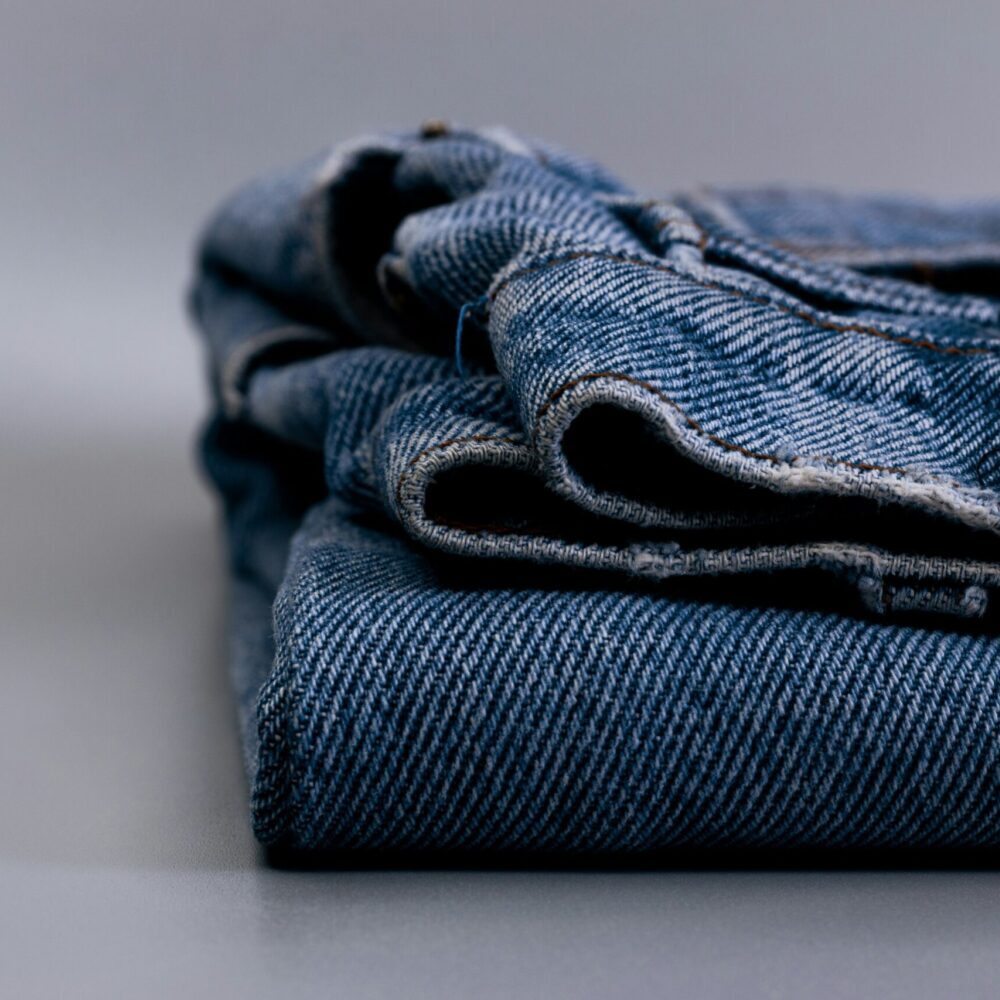
Traditional denim is a woven twill fabric known for its structural strength and iconic indigo aging. However, for infants, toddlers, and active kids, soft knitted denim (often constructed as indigo French terry or jersey blend) represents a major product differentiator for modern brands.
| Technical Factor | Traditional Woven Denim | Soft Knitted Denim (Loop / Terry) |
|---|---|---|
| Fabric Construction | Woven 3/1 or 2/1 Right-Hand Twill | Knitted Loopback / French Terry structure |
| Hand Feel & Softness | Structured, requires heavy washing to soften | Inherently plush, cloud-soft interior against skin |
| Elasticity & Recovery | Rigid or 2-way stretch (via Spandex/Elastane) | Natural 4-way mechanical stretch & flexibility |
| Best Application | Structured boys’ jeans, denim jackets, shorts | Baby onesies, toddler rompers, lounge shorts |
| Durability & Wear | High tear strength and tensile durability | Moderate-high, optimized for active infant comfort |
💡 OEM Sourcing Spotlight: MK-Kids Product Integration
Our facility specializes in both traditional woven twill and high-elasticity knitted denim. Explore our core wholesale lines:
- Wholesale Baby Denim Onesies (Knitted softness engineered for 0–24M infants)
- Custom Kids Denim Rompers (3-way stretch with snap button convenience)
- Girls Denim Strap Dresses (Lightweight 6oz cotton poplin/denim blends)
- Boys Cotton Denim Jeans (Durable everyday wear with adjustable elastic waistbands)
2. Denim Washing & Sustainable Dyeing Techniques
Indigo dyeing is naturally rigid and chemically sensitive. Wet processing (denim washing) converts stiff raw fabric into commercially viable, soft-touch kids’ clothing. However, washing must be strictly controlled to prevent residual chemical toxicity and excessive fabric degradation.
Enzyme Washing for Maximum Softness
Enzyme washing uses eco-friendly cellulase enzymes to digest surface fiber fuzz, resulting in a smooth, non-scratchy texture without weakening fabric integrity. It is the gold standard for children’s denim hand-feel enhancement.
Sustainable Eco-Wash: Ozone & Laser Finishing
Global clothing brands are prioritizing reduced environmental footprints. Modern OEM facilities utilize closed-loop water treatment along with advanced eco-wash technologies:
- Ozone Washing: Uses oxygen gas (O3) to bleach indigo shade variations, eliminating up to 80% of water and chemical usage compared to traditional stone-washing.
- Laser Abrasion: Replaces manual sandblasting and harsh acid washes with precise laser etching for subtle vintage whiskering without chemical residue.
- Low-Impact Water Recycling: Ensures wash houses comply with international wastewater discharge standards.
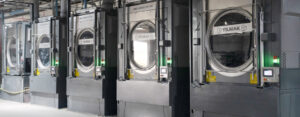
⚠️ Supplier Sourcing Advice for Brands: Do not make environmental or “eco-friendly wash” marketing claims to retail buyers unless supported by verified supplier documentation, such as OEKO-TEX Eco-Passport or Environmental Impact Measuring (EIM) score reports from your manufacturing partner.
3. Children’s Apparel Safety: Hardware & Compliance Standards
Product safety is non-negotiable in childrenswear manufacturing. Loose components or unsafe chemicals can result in global product recalls, heavy regulatory fines, and brand destruction.
Hardware Inspection & Pull-Test Standards
Metal snaps, rivets, tack buttons, and zippers must endure rigorous stress testing during production:
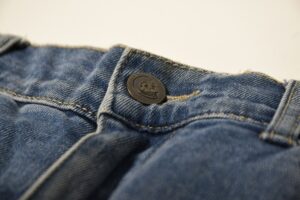
- Snap & Button Pull-Strength: All attached hardware must withstand a minimum pull force of 70 Newtons (15.7 lbs) for 10 seconds (ASTM F963 / EN 71 compliance) to prevent choking hazards.
- Nickel-Free & Lead-Free Trims: All metal components must be electroplated nickel-free and comply with lead limits (< 90 ppm).
- YKK / Premium Zippers: Zippers must feature smooth top/bottom guards to eliminate sharp metal edges.
Drawstring & Neckline Safety Regulations
To prevent strangulation risks, children’s denim jackets, hoodies, and waistbands must strictly comply with regional market standards (e.g., U.S. 16 CFR Part 1120 / CPSC Guidelines and EU EN 14682). Hood and neck drawstrings are entirely eliminated for sizes 0 to 7 years.
Kids Denim Safety & Compliance Checklist
| Compliance Standard | Target Market | Key Technical Parameters Checked |
|---|---|---|
| OEKO-TEX Standard 100 (Class I) | Global / Europe | Strict chemical limits for infants/toddlers up to 36 months (Phthalates, Formaldehyde, Heavy Metals). |
| CPSIA / CPSC | United States | Children’s Product Certificate (CPC), lead content in substrates/coatings, small parts pull testing. |
| REACH Regulation | European Union | Restricted Chemical Substances List (RSL) audit on indigo dyes and washing auxiliaries. |
| GB 31701-2015 (Category A) | China / Asia | Infant safety technical code governing fiber purity, pH values (4.0-7.5), and colorfastness. |
4. Customization Options for OEM / ODM Kids Denim Brands
One of the key advantages of partnering with a specialized OEM manufacturer is the ability to develop proprietary fits or modify existing factory silhouettes to suit your brand aesthetic.
- Custom Fabric Blends: 100% Organic Cotton, Cotton/Poly/Spandex, Rayon-Spandex Denim Knit, Tencel Blend Denim.
- Custom Wash Effects: Light Indigo, Vintage Acid Wash, Bleach Wash, Tinted Eco-Wash, Enzyme Stone Wash.
- Private Label Hardware & Packaging: Custom embossed leather back patches, branded rivet buttons, woven neck tags, hangtags, and biodegradable polybags.
- Embellishments: Machine embroidery, puff printing, woven patches, distressed distressing details.
5. Sampling Process & Quality Control Timeline
| Stage | Deliverable / Action | Technical Scope & Verification Focus |
|---|---|---|
| 1. Tech Pack Review | Spec & Quote Approval | Fabric weight confirmation, size spec chart evaluation, initial FOB cost estimate. |
| 2. Prototype Sample | 1st Fit Sample | Verification of pattern grading, seam construction, and initial silhouette proportion. |
| 3. Wash & Trim Sample | Wash Lap Dip / Swatches | Matching target indigo shade, hand-feel audit, approval of custom metal hardware. |
| 4. Pre-Production (PP) | Golden Sample | Final sample made on actual production line using bulk fabric, trims, and packaging. |
| 5. Bulk Production | AQL 2.5 Quality Inspection | In-line inspection, needle detector sweep, button pull-test, final packaging audit. |
6. Frequently Asked Questions (FAQ) for B2B Denim Buyers
What is the typical Minimum Order Quantity (MOQ) for custom kids denim?
Because denim dyeing and washing require dedicated vat volumes, standard woven denim MOQs typically start at 300–500 pieces per style/color. However, utilizing stock knitted denim fabrics allows flexible small-batch orders starting from 100–200 pieces for emerging boutique labels.
How do you ensure color consistency across bulk denim washing runs?
Denim washing is a semi-artisan process. To maintain consistency across bulk lots, we establish master shade bands (Light, Medium, Dark tolerances) approved by the brand prior to bulk processing.
Can we order custom kids denim samples before committing to bulk order?
Yes. Proto-samples and wash swatches are delivered within 7–12 business days following Tech Pack confirmation.
Can you help with Tech Pack creation if we only have design sketches?
Yes. Send us your sketches or reference photos—we will turn your concepts into production-ready specs for sampling and bulk manufacturing.
Build Your Kids Denim Collection With the Right Manufacturing Partner
Looking for a reliable China supplier for kids denim wholesale, OEM, or private-label production? Discuss your fabric, wash, design, sampling, and safety requirements with our technical team.
Ready to develop your next custom kids denim collection?